
Cushing’s Disease and Equine Metabolic Syndrome
Filed under: Articles, Cushings Disease, Diagnostic, Endocrine Disorders, Genetic Disorders, Insulin Resistance, Lameness, Nutrition
Heather Landrey, DVM
printer friendly PDF format
Cushing’s disease is often diagnosed after a horse owner questions the vet about why an older horse is not shedding their winter coat or has an abnormally long coat during the warmer months of the year. This long coat, frequently curly, that does not shed is called hirsutism and is often accompanied by frequent urination, increased thirst, weight loss, abnormal fat distribution (cresty neck and fat pads near tailhead) and laminitis. Some other signs that often accompany Cushing’s disease and may not be recognized by the owner are; increased susceptibility to infection, delayed wound healing, infertility, sinusitis, dental abnormalities and decreased immunity to gastrointestinal parasites.
Diagnosis of Cushing’s disease is achieved by examination and blood tests. The most common blood test is the Dexamethasone Suppression Test. The test requires a blood draw in the afternoon, followed administration of dexamethasone. The following morning (17-19 hours later) a second blood sample is taken. Studies have proven this test to be one of the most accurate methods of diagnosis, but it does require two farm calls which increases the cost for the owner. It is also recommended that blood work be performed on horses that are suspected to have Cushing’s disease to look for underlying infections or disease processes.
Once diagnosed, treatment is managed by good husbandry and medication. Good husbandry efforts are aimed at improving the condition of affected horses. Some of the recommendations are; body clipping, regular deworming, dental exams, regular hoof care and improved nutrition. The current medication of choice is pergolide which is administered daily in an oral form.
Equine Metabolic Syndrome (EMS) is characterized by obesity, laminitis and insulin resistance. For many years horses with EMS were thought to have an early form of Cushing’s disease; however, they were often younger in age, lacked the long coat and tested negative for Cushing’s disease. The abnormal fat deposition and laminitis were the only common threads. Research for an answer to the mystery of obesity and laminitis turned to human medicine where a similarity to the risk for type-2 diabetes mellitus and obesity in humans was examined. Research revealed that like humans, equine obesity directly causes insulin insensitivity. This leads to a hyperglycemic state (elevated glucose in the blood stream). Although the mechanism by which insulin resistance leads to laminitis is not clear, the association is evident-obese horses are more susceptible to laminitis and obesity leads to insulin resistance.
Diagnosis of EMS includes a physical examination, history of laminitis and blood work to evaluate insulin and glucose levels. It is also recommended to test for Cushing’s disease as both diseases can present as an obese horse with laminitis. Horses with Cushing’s disease will respond to pergolide administration while EMS horses will not. Also, it is possible that a horse may have both Cushing’s disease and EMS
Treatment of EMS focuses on diet and exercise. Obesity must be addressed. Grass hay should be the primary component of the diet. Soluble carbohydrates such as sweet feed, carrots, apples and fresh grass should be eliminated from the diet. Once obesity is under control, dietary energy may be increased with beet pulp or rice bran. An exercise program should be initiated on and individual basis according to the degree of laminitis.
Equine Cushing’s disease and Equine Metabolic Syndrome have some similarities in clinical signs, but the disease processes are quite different. While research continues to provide new information on these two diseases, we have enough information to diagnose and treat each disease. Early diagnosis and treatment improves the prognosis and can lead to a longer, healthier life for your horse.
Splint Bone Problems: Splints, Pops and Fractures
Hunter Ortis, DVM
printer friendly PDF format
The splint bones are small bones located on either side of the larger cannon bone of the horse’s lower limb, just below the knees and hocks. Each splint bone is attached firmly to the cannon bone by a ligament which spans the length of the splint bone called the interosseous ligament. A “splint” or “popped splint” occurs in the forelimb when the interosseous ligament is torn or bruised.
Popping a splint is usually an exercise-related event, especially where there is lots of turning and concussion. External trauma from the opposite foot or a kick can also result in a splint formation. Conformation, such as bench knees or offset knees, makes a horse more prone to splints; but exercise stresses alone can pop a splint even in perfectly conformed horses. Popping a splint is generally a minor event associated with mild to moderate lameness and swelling. Most lameness from splints will resolve in 2-3 weeks with proper treatment and rest, although full healing and readiness to resume work may take a little longer. Severely injured splints may take longer to heal, especially if the interosseous ligament sustained excessive damage or swelling impinges on the suspensory ligament.
An active or hot splint in the acute phase of injury often has heat and sensitivity to thumb pressure associated with a focal swelling over the point of injury. The initial injury causes inflammation of the torn ligament and nearby bone. The healing splint produces new bone to reaffirm the attachment to the cannon bone, stabilizing the splint bone and the source of irritation. The resulting blemish will gradually smooth out over a period of weeks to years and become less noticeable. Wrapping and anti-inflammatory treatment may decrease the overall size of the blemish if treatment is initiated early. Sometimes counter-irritant treatment may hasten the remodeling of an old, cold splint to help it smooth out more quickly. A small percentage of splints will cause chronic lameness due to impingement on the suspensory ligament
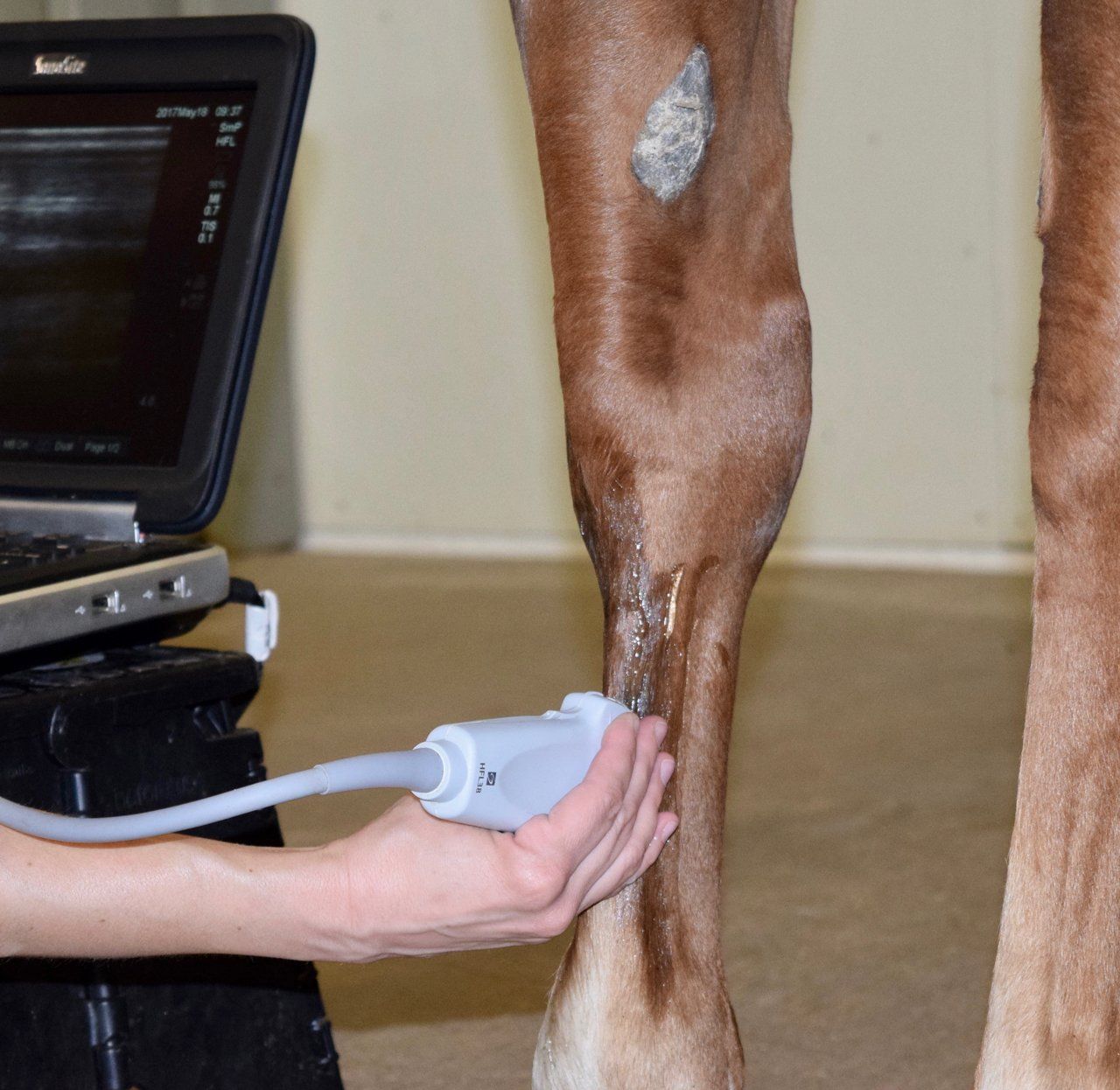
and may need to be corrected surgically. Physical examination is often augmented with radiography to evaluate hot splints as to not be confused with a splint bone fracture.
Splint bone fractures can appear very similar to splints on physical examination although lameness is often more severe. Similar to popping a splint, a fractured splint bone may have focal swelling and pain on palpation. Splint fractures may also have a draining tract in the region of the fracture, from the initial wound. Splint bone fractures occur from similar causes as splints such as external trauma from kicks or direct blows from hitting other objects. Splint fractures can also be caused by internal forces.
As a horse matures, the interosseous ligament loses pliability; thus splint bone fractures occur more often in older horses (greater than 4-5 years). As is the case with any fracture, splint bone fractures require radiographs to obtain a proper diagnosis and treatment plan. Many uncomplicated splint bone fractures can heal with conservative care but special considerations may require surgical repair or removal of bone fragments.