
Now that she’s pregnant….

Nathan Voris, DVM
printer friendly PDF format

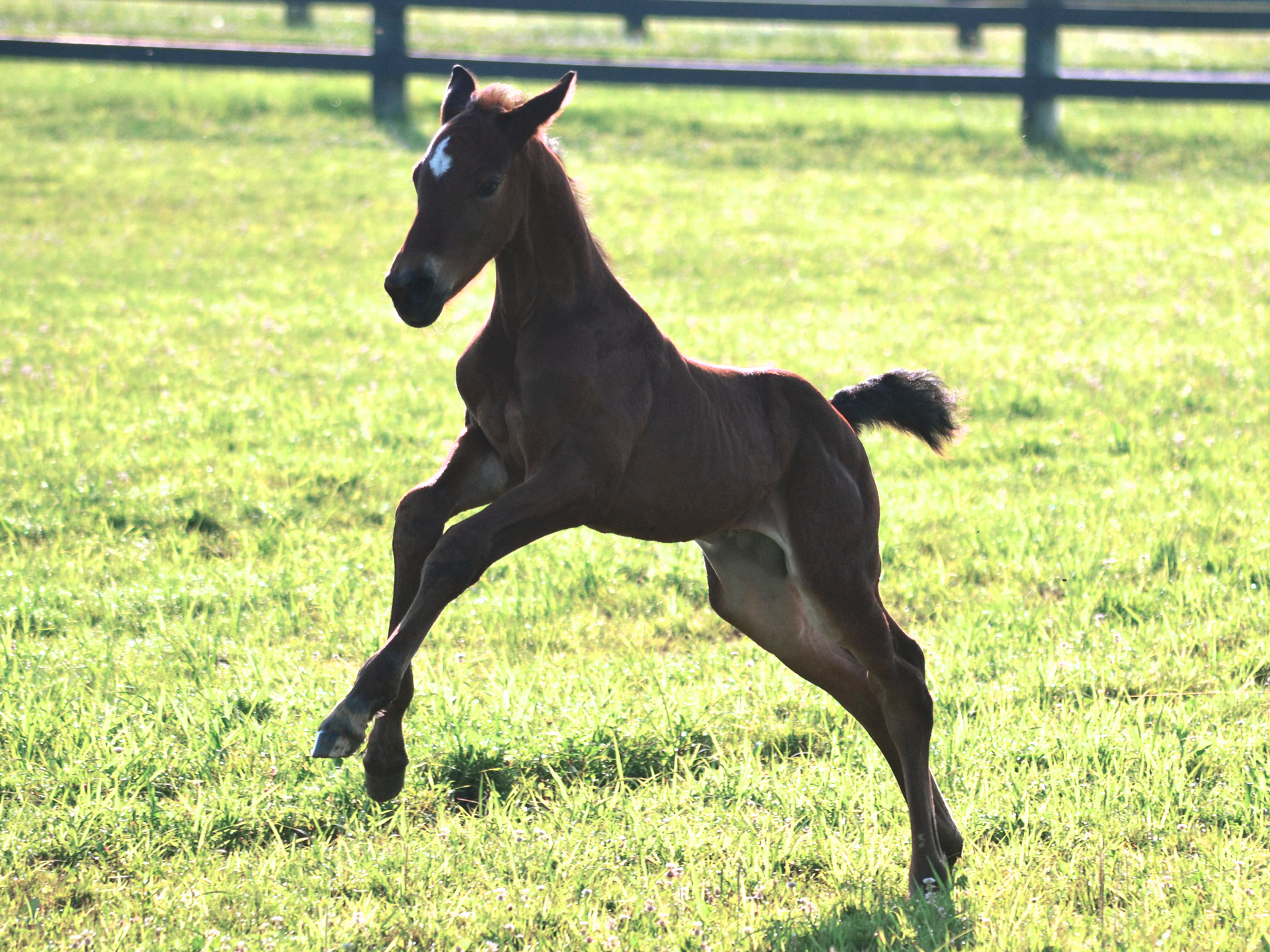
As the breeding season has come to an end on many farms, the focus shifts from getting your mare in foal to maintaining pregnancy and optimizing her chances of delivering a healthy foal next spring. While the general care for a broodmare early in gestation is similar to that of any other horse, there are some special needs to consider as the foaling date approaches.

Nutrition

Pregnant mares during early to mid gestation require little if any special changes to their diet if they are in good body condition. During the last 3 months of gestation, the foal will gain more than half of it’s eventual birth weight, therefore, a gradual increase in quantity and/or quality of feed will be required to enable the mare to continue consistent weight gain throughout her pregnancy.

Additionally, it is important to remove the mare from all sources of fescue during the last 3 months of gestation. Most fescue contains a fungus that causes prolonged gestation, thickening of placental membranes and inhibits milk production.

Vaccination and deworming

Preventive health care measures are important for optimal performance in all types of horses. Maintaining a current vaccination and deworming schedule for your broodmare is vital to ensure the health of both the mare and foal during gestation and the immediate post-parturient period.

Rhinopneumonitis is caused by a Herpes virus-one of which causes abortions. Maintaining adequate protection against “rhino” requires inoculations during the fifth, seventh and ninth months of gestation. Broodmares should be vaccinated for Eastern and Western Encephalitis, Tetanus, Influenza and West Nile one month prior to foaling to insure that colostral antibody levels are adequate for passive transfer.

While regular deworming is recommended (every 6-8 weeks), it is not advisable to deworm your mare during the first 60 days of gestation when the fetal organs are forming, nor during the last 30 days of gestation.

A recommended gestational timeline is summarized in the table below.

Month of Gestation Action Required
5th Month Deworm, 5-month Rhino shot
7th Month Deworm, 7-month Rhino shot
8th Month Remove mare from fescue
Provide adequate nutritional support to maintain gradual weight gain through the remainder of gestation.
9th Month Deworm, 9-month Rhino shot
10th Month Eastern/Western Encephalitis, Tetanus, Influenza and West Nile Vaccination

Lameness In Focus: The Hock

August 7, 2004 by Nathan Voris, DVM
Filed under: Articles, Diagnostic, Hock, Joint, Lameness 

Nathan Voris, DVM
printer friendly PDF format

Any athlete can suffer from joint pain or injury and the horse is no exception. The hock is a common source of lameness in the hind limb of the performance horse. Horses that stop or turn sharply at speed are especially prone to injuries from compression and rotation of the hock joints. While there are many articulations, ligaments and tendons responsible for the structure and function of the equine hock the following three joints are most often associated with lameness.

Hock diagramThe tibio-tarsal joint is uppermost and largest of the joints of the hock. This joint acts as a hinge allowing for all of the motion in the hock. Enlargement of the tibio-tarsal joint is referred to as a “bog” or a “boggy hock”. Fluid enlargement of the tibio-tarsal joint can occur due to an injury, presence of a developmental bone chip (OCD), arthritis or can be present for reasons of no clinical significance. The tibio-tarsal joint will often remain enlarged after an injury has healed. While not all horses that have a boggy hock have a significant problem, enlargement of the tibio-tarsal joint should be carefully evaluated when examining the soundness of the horse.

Hock radiographThe two joints most commonly involved with hock lameness in the performance horse are collectively referred to the lower or distal tarsal joints. The distal intertarsal (DIT) joint and the tarso-metatarsal (TMT) joint are slab joints responsible for load bearing and stabilization, but move very little. Repetitive rotation and compression of these low motion joints can lead to inflammation and pain. Long term overload and inflammation or an acute severe injury (fracture) can lead to permanent, but often manageable, arthritic changes.

Diagnosis of a hock lameness involves a manual examination of the limb and observation of the horse at a trot. Monitoring the horse’s gait following flexion of the hind limb (spavin test) can help to localize the source of pain to the hock. Further confirmation of a hock problem can be obtained by “blocking out” the lameness with local anesthetic joint injections. Finally, radiography, ultrasound and nuclear scintigraphy (bone scan) are tools veterinarians may use to further localize the problem, determine the extent of damage and develop treatment options.

Depending on the extent of the problem, treatment options can be as simple as stall rest and anti-inflammatory medications such as “Bute”. For inflammation of the hock joints or mild arthritis, your veterinarian may recommend injecting the joints with corticosteroids and hyaluronic acid. A hock injection involves prepping the skin of the hock with an antiseptic, inserting a needle and injecting medication directly into the affected joint. This will locally reduce pain more effectively and for a longer duration than systemic medications. For more severe problems such as bone chips, fractures or chronic arthritis, surgery may be recommended.

Lameness in the hind limb will cause significant performance problems regardless the horse’s age, breed or use. By careful evaluation and use of diagnostic techniques and procedures, your veterinarian can recommend a proper treatment that will help your horse painlessly perform to the best of his ability. If you have questions about a lameness issue or any concern regarding the health and well-being of your horse, do not hesitate to call our clinic. A veterinarian will be glad to assist you with all of your equine medicine, lameness, surgery or reproductive needs.